
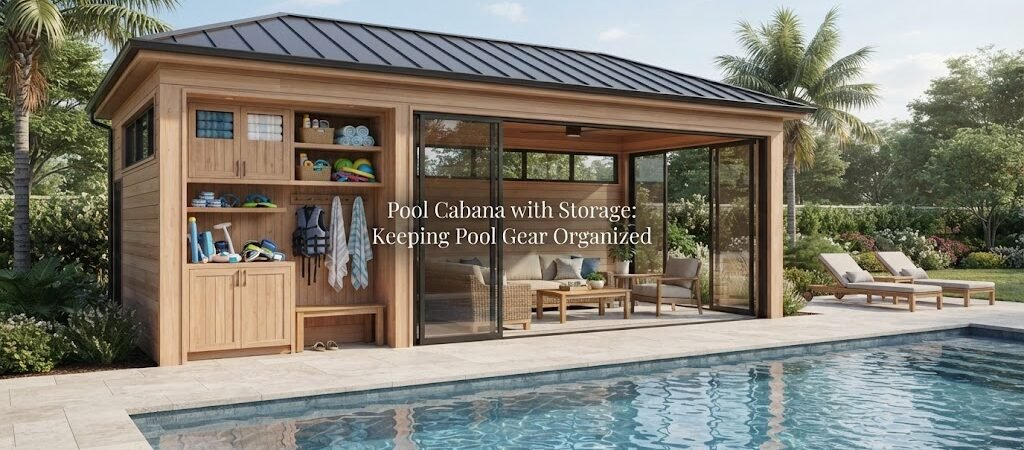
Anyone who owns a pool knows the gear piles up fast. Floats, noodles, skimmers, chemicals, towels, extra filters, maybe a robot vacuum charging in the corner. Without a dedicated spot for all of it, that stuff ends up scattered across the patio, stuffed in the garage, or crammed into a closet that was never meant to hold pool equipment in the first place.
A pool cabana with real storage solves that problem. It’s not just a shady spot to change clothes or grab a drink. Done right, it becomes the command center for everything pool related, keeping your yard looking clean and your gear easy to find.
Why Storage Matters More Than People Expect
Most people plan a pool cabana around the fun parts first. A bar area, a lounge space, maybe a bathroom. Storage gets tacked on as an afterthought, if it gets planned at all.
The problem is pool ownership comes with a surprising amount of stuff. Chemicals need a cool, dry, ventilated spot away from kids and pets. Cleaning equipment like poles, nets, and vacuums need somewhere to lean without falling over. Cushions and floats need a place to dry out and stay out of the weather. If none of that has a home, it ends up back on the patio, and the space starts to feel cluttered no matter how nice the cabana itself looks.
Thinking about storage early, rather than squeezing it in later, makes a real difference in how well the whole structure functions.

What Usually Needs a Place to Go
Every pool setup is different, but a few categories come up again and again when people plan storage for a pool cabana:
- Pool chemicals and testing kits
- Cleaning tools like skimmers, brushes, and vacuum hoses
- Floats, noodles, and inflatable toys
- Towels and cushions
- Pool covers or solar blankets
- Small equipment like pumps or filter parts, if not housed elsewhere
Not every cabana needs to hold all of this. Some homeowners keep pool equipment like pumps and heaters in a separate mechanical area and just use the cabana for the everyday items people grab constantly, like towels and toys. Others want one structure that handles everything. Knowing which items actually need daily access versus occasional storage helps shape how much space to set aside.
Storage Layout Options That Actually Work
There isn’t one right way to add storage to a pool cabana, but a few approaches tend to work well depending on the size and layout of the structure.
A dedicated storage closet or room is the most straightforward option. This works well when chemicals need to be kept separate from towels and cushions, since chemical storage really should have its own ventilated space rather than sharing a closet with fabric items. Even a small closet, four or five feet wide, can hold a surprising amount if shelving is used well.
Built-in cabinetry along an exterior wall is another common choice, especially for cabanas that also serve as an entertaining space. Cabinets keep things out of sight while still being close at hand, and they don’t eat into usable floor space the way a full closet does.
Some pool cabanas use a combination of covered outdoor storage and interior closets. A covered bench or storage box near the pool itself can hold floats and pool toys, while the more sensitive items like chemicals stay inside the structure in a locked or ventilated space.
If the pool house is going to double as a place for guests to change or use a bathroom, storage often gets pushed to one side of the layout rather than spread throughout, keeping the changing area open and uncluttered. Looking at a range of pool house and cabana plans can help show how different floor plans balance storage against the other functions people want, like a bathroom, a bar, or a lounge area.
Sizing Storage Without Guessing
It’s tempting to just add a small closet and hope it’s enough, but sizing storage really comes down to how the pool gets used. A family with young kids and a lot of floats and toys needs more open storage than a couple who mainly uses the pool for laps. A pool that’s used for entertaining regularly probably needs a spot for extra towels, cushions, and maybe folding chairs.
Rather than guessing at a specific square footage, it helps to think through what actually needs to be stored and how often it gets used. Items used daily should be easy to reach without digging. Items used occasionally, like a pool cover swapped out seasonally, can go on a higher shelf or in a less convenient spot.
Because storage needs vary so much from one household to another, general pool house layouts are a useful starting point rather than a fixed formula. Seeing how other layouts divide space between storage, seating, and utility areas makes it easier to figure out what proportions make sense for your own yard.
Materials and Ventilation Considerations
Pool storage areas deal with humidity, chemical fumes, and general outdoor wear, so the materials matter. Moisture resistant shelving, whether metal, treated wood, or plastic, tends to hold up better than untreated wood in a space that’s likely to get damp towels and dripping equipment.
Ventilation is worth planning for, especially in any closet or cabinet holding pool chemicals. Chemical fumes need somewhere to go, and a sealed, unventilated space isn’t a good long term storage solution. This is one of those details that depends on local building requirements and the specific chemicals being stored, so it’s worth checking with a local professional rather than assuming any one setup is safe for every situation.
When a Pool Cabana Becomes More Than Storage
Some homeowners start out planning a simple storage focused cabana and end up wanting more out of the space, like a small kitchenette, a bathroom, or even room for overnight guests. If that’s a direction you’re considering, it’s worth looking at how storage fits alongside those other features rather than planning it in isolation. An ADU and small home blueprint guide can be useful here, since it covers how small structures balance functional space like storage with living or guest areas.
Getting the Layout Right Before You Build
Storage is one of those things that’s much easier to plan for upfront than to add later. Once walls are framed and a layout is set, retrofitting a proper storage closet or built-in cabinetry gets a lot more complicated and expensive.
Before settling on a final design, it’s worth spending time comparing different pool house and cabana plans to see how storage gets handled across a range of layouts and sizes. Seeing the tradeoffs other designs make between storage, seating, and utility space can make it a lot easier to land on a layout that actually fits how your household uses the pool, instead of realizing six months in that there’s nowhere to put the pool noodles.