
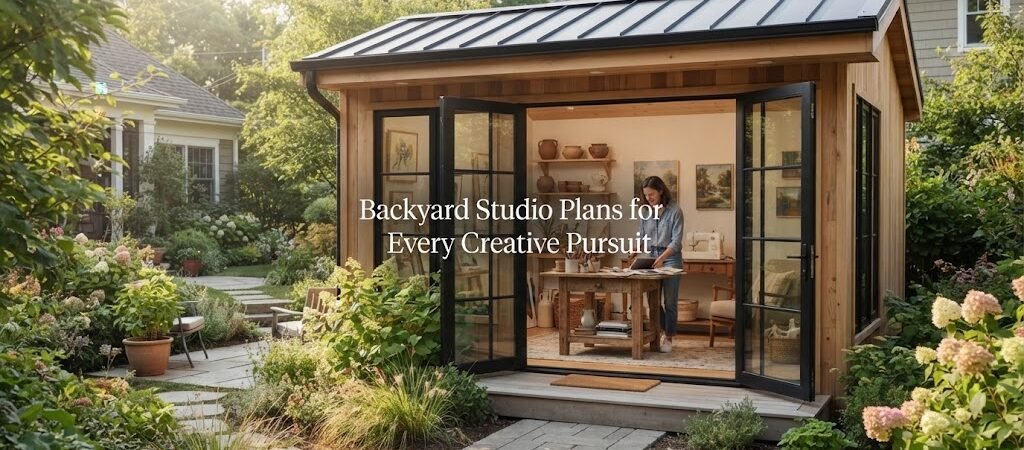
Backyard Studio Plans for Every Creative Pursuit
Getting away from the kitchen table or the spare bedroom changes how you work. A detached backyard studio gives you a physical boundary between your daily life and your creative time. But picking the right plan is about more than just finding a basic shed design. You need a space built around how you actually create. A good backyard studio plan accounts for natural light, heavy electrical loads, sound control, and specific storage needs. Here is how to match your plans to your specific creative pursuit.

Sizing Your Creative Space
The size of your studio depends entirely on the mess you make and the gear you use. A writer might only need an 8 by 10 foot space. A painter usually needs at least 12 by 16 feet just to step back and look at a large canvas. A woodworker needs even more room for material storage and safe tool movement.
When looking at floor plans, think about your largest piece of equipment or your biggest ongoing project. If you build a 10 by 12 space, make sure your main desk or workbench fits without blocking the door. You also need room to move around comfortably without bumping into walls or shelves.
Tailoring the Layout to Your Hobby
Visual Arts
Painters, illustrators, and photographers need great light. Look for plans with large windows. Windows facing north provide consistent, indirect sunlight that will not cast harsh shadows or change color throughout the day. You might also want a plan that includes a utility sink for washing brushes or mixing clay.
Audio and Music
Musicians have unique spatial needs. A standard square room can create weird sound echoes. Look for plans that allow for acoustic treatment on the walls and ceiling. You will also want to focus on the building envelope. Good insulation, solid core doors, and double-pane windows help keep the noise in and the neighborhood quiet.
Writing and Digital Work
If your creativity happens on a screen, your plan should focus on a quiet, ergonomic layout. You need a reliable internet connection, so plan for a buried conduit from the main house to the studio. Adding a small seating area away from the desk gives you a place to read or think without staring at a monitor.
Hands-on Crafts
Pottery, woodworking, and metalwork require heavy-duty plans. You need a concrete slab foundation to handle heavy machinery and wet materials. Look for plans with high ceilings for dust collection systems and wide double doors to move large lumber or materials in and out.
Essential Features to Include in Your Plans
Lighting
Natural light is great, but you need good artificial light for early mornings and late nights. Plan for overhead LED fixtures and dedicated task lighting over your main work area.
Electrical
Creatives use a lot of power. A standard shed might have one or two basic outlets. Your studio plan needs dedicated circuits for heavy tools, kilns, or multiple computers. Talk to your builder about adding extra outlets exactly where you need them.
Climate Control
You cannot create if you are freezing or sweating. Make sure your plans include wall cavities thick enough for proper insulation. You will also need to plan for a mini-split heating and cooling system to keep the temperature comfortable year-round.
Thinking About Future Flexibility
Sometimes our hobbies evolve. Maybe you start painting in your backyard studio, but a few years down the line, you want to add a small sink and a half bath. Or maybe you want to turn the space into a weekend guest retreat.
If you think you might want to add plumbing or a small kitchenette later, reviewing an ADU and small home blueprint guide can help you understand how to frame and plumb a more complex detached structure.
If you just want a cozy, rustic feel for your creative time, you can borrow design ideas from a cabin plans collection to give your studio a warm, retreat-like vibe.
Site Placement and Local Rules
Where you put the studio matters just as much as the plan itself. Track the sun path on your property. If you are a painter, you want the windows facing the right direction for the best light. If you are a musician, you might want to tuck the studio behind the main house or behind a fence to buffer the sound.
Always check your local zoning rules and setback requirements before you buy materials. Every town has different rules about how close you can build to your property line. Some areas also have limits on the total square footage of detached structures on a single lot.

Final Thoughts
Building a backyard studio is a big step toward taking your creative work seriously. The right plan gives you the exact environment you need to focus and make things. Take your time matching the layout to your specific hobby.
If you are looking for a flexible layout that could serve as a studio today and a guest space tomorrow, exploring pool house and cabana plans might give you some great ideas for multipurpose designs.