
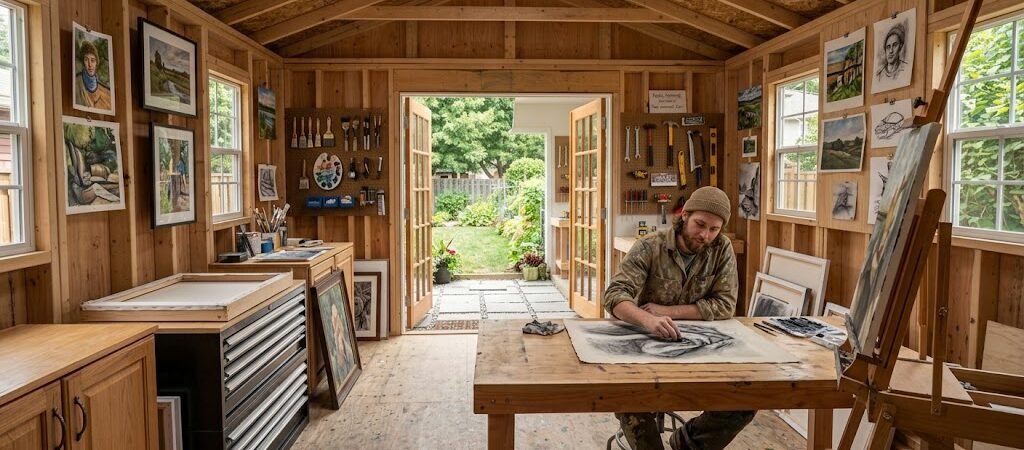
Art studio shed plans should prioritize natural light above all else. The best layouts feature south-facing clerestory windows, skylights, and an open floor plan that distributes daylight evenly across your workspace.
Why Does Natural Light Matter for Art Studios?
Natural light is essential for any artist’s workspace. It not only enhances the mood but profoundly influences color accuracy, minimizes eye strain during long sessions, and can reduce electricity costs. A well-lit studio can diminish the need for artificial lighting by up to 60% during daylight.
Starting Your Art Studio Shed Project
Before starting your project, it’s crucial to understand that a backyard creative workspace isn’t just any shed. It requires specific designs for light, ventilation, and workflow.
Define Your Primary Medium
Your artistic medium greatly influences your space requirements:
- Oil painters typically need at least 200 square feet.
- Watercolor artists need about 120 to 150 square feet.
- Add 50% more space if you plan to mix mediums or have multiple projects.
Check Local Regulations for Your Shed
Most local jurisdictions require permits for detached structures over 120 square feet. Consult your local building department for specifics before starting your construction.
For guidance on safe materials, check with the Environmental Protection Agency.
How to Optimize Window Placement
Window placement is critical for proper lighting. Misplaced windows can hinder light distribution.
South-Facing Windows
South-facing windows provide consistent, diffused light throughout the day, making them ideal for art studios. Orient your longest wall toward true south if possible.
North-Facing Windows
North-facing windows are particularly sought after by artists for their stable, shadows-free light, ideal for color matching and detail work.
The Clerestory Window Advantage
Clerestory windows bring light deep into the space without shadows. Position them high on the south or north wall, 7 to 8 feet above the floor for best results.
Skylights: A Complementary Solution
Skylights fill in the gaps where side light can’t reach. Use diffusing glass or install shades to manage glare effectively.
Effective Layout Strategies
A smart layout enhances the natural flow of light through your studio.
The Open Floor Plan Method
Avoid unnecessary walls. An open layout allows maximum light dispersion. Use partial-height partitions for visual separation without blocking light.
Strategically Position Your Work Surface
Your main work table should be positioned perpendicular to the window wall to avoid shadows from your body. Ideally, maintain an 18-inch distance from south-facing windows.
Creating a Light Reflection System
Using light neutral colors for your walls reflects 80-85% of incoming light, enhancing brightness in your studio. Adding mirrors can double your usable window area.
Minimum Specifications for Your Art Studio
Square Footage Requirements
- Watercolor and drawing: 120 square feet minimum
- Oil painting and mixed media: 150 to 200 square feet
- Sculpture and 3D work: 200 to 300 square feet
- Photography and digital art: 100 to 150 square feet
Ceiling Heights
A height of 9 to 10 feet is recommended for art studios to enable better ventilation and light flow.
Door Widths
Standard 36-inch doors accommodate most materials, but consider wider doors for larger pieces.
How to Control Climate in Your Studio
Temperature and humidity control are essential for preserving your materials.
Insulation Tips
Insulate your walls to at least R-13 to maintain a comfortable environment.
Ventilation Needs
Active ventilation is critical in studios that use solvents. An exhaust fan is highly recommended.
Steps to Build Your Studio
Here’s a phased overview of converting your shed plans into a functional art studio:
Phase 1: Planning and Permits
- Timeframe: 2 to 4 weeks
- Key Tasks: Design, permits, material ordering
Phase 2: Foundation and Framing
- Timeframe: 1 to 2 weeks
- Key Tasks: Foundation and walls
Phase 3: Electrical and Finishing
- Timeframe: 1 to 2 weeks
- Key Tasks: Wiring, insulation, drywall
Phase 4: Final Touches
- Timeframe: 1 week
- Key Tasks: Paint, trim, organize
Common Mistakes to Avoid
Some common pitfalls include:
- Underestimating storage requirements
- Overlooking electrical needs
- Neglecting to install a sink
Cost Breakdown for a 12-by-16 Foot Studio
Here’s a realistic cost estimation:
- Foundation: $1,500-$3,000
- Materials: $4,000-$7,000
- Electrical and lighting: $800-$1,500
- Insulation and drywall: $600-$1,200
- Finish flooring: $400-$800
- Windows and skylights: $1,200-$2,500
- Permits: $200-$600
- Fixtures/storage: $500-$1,000
Total: $9,200 to $17,600 depending on various factors.
FAQs About Art Studio Shed Plans
What size should my art studio shed be?
A 12-by-16 foot studio is typical for painters, providing enough space for work and storage. Smaller studios may fit well for watercolorists.
Should I build new or convert my garage?
Detached studios offer better light and flexibility. Convert a garage if you’re on a budget but remember the limitations.
Why is window orientation crucial?
Proper orientation significantly impacts light quality, enhancing the work environment.
Are standard shed plans sufficient for an art studio?
Standard plans require modifications for optimal functionality, including window placement and ventilation.
How can I improve an existing dark studio?
Consider adding skylights or solar tubes for better lighting, or use full-spectrum LED bulbs as a secondary option.
Next Steps for Your Art Studio Project
With the information you have gathered, you can make informed decisions about your shed project. Start by measuring your space and researching local permit guidelines.
Sketch a floor plan prioritizing your layout, materials, and timeline. A thorough planning phase can ensure your art studio shed plans lead to a rewarding creative space.