
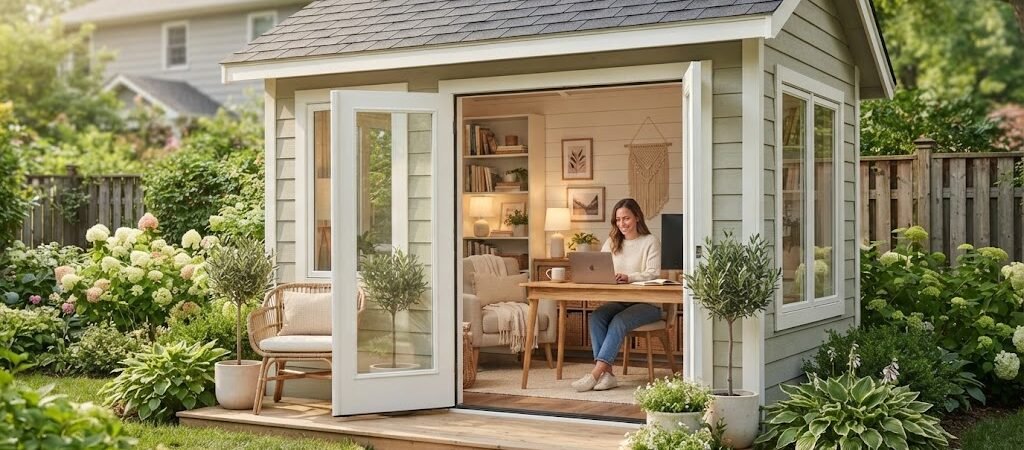
A she shed office can be more than a small building in the backyard. Done well, it becomes a quiet place to work, create, read, or simply get away from the noise of the house.
The best she shed office plans balance comfort with practical details. You need enough room for a desk and chair, but also space to move around, store supplies, bring in natural light, and stay comfortable through the seasons. A good plan also makes the building easier to place, wire, insulate, and finish.
The goal isn’t to build the biggest backyard office possible. It’s to create a space that works for the way you actually spend your time.
Start With How You’ll Use the She Shed
Before choosing a plan, think about what needs to happen inside the room.
If the main purpose is remote work, you may only need a desk, office chair, shelves, and a comfortable spot for video calls. If you also write, paint, sew, craft, or run a small business from the space, you’ll need more floor area and storage.
A simple she shed office might have:
- A main desk or worktable
- One comfortable chair
- Wall shelving or cabinets
- A small area for supplies
- Good task lighting
- Windows for daylight and ventilation
- Space for heating or cooling equipment
Try drawing the furniture on paper before settling on a building size. This simple step can reveal whether your favorite plan will feel comfortable or cramped.

What Size Works for a She Shed Office?
There’s no single best size. The right footprint depends on your furniture, storage needs, site, and whether the building has another purpose.
A compact office can work well when the room is mostly used for one desk and a few shelves. A larger footprint makes more sense if you want a second workstation, a reading chair, craft table, or generous storage.
Pay attention to the usable floor area, not just the outside dimensions. Wall thickness, doors, windows, and built-in storage all take up space.
For example, putting a desk directly in front of a window may look great, but it can create glare on a computer screen. A desk positioned perpendicular to the window can often give you better daylight without putting the screen directly in the sun.
Choose a Layout That Fits the Work
A rectangular room is often easy to furnish because you have several options for placing a desk and storage.
A simple layout might put the desk along one wall, with shelving on another. This leaves the center of the room open and makes the space feel less crowded.
If you use the office for creative work, consider a larger work surface rather than focusing only on a traditional desk. A long table can provide room for a computer on one end and paperwork or projects on the other.
For video meetings, think about what’s behind your chair. A window or messy storage wall isn’t always the best background. A simple wall with shelving, artwork, or a clean finish can make the room more comfortable for calls.
Windows Matter More Than They Seem
Windows bring natural light into a detached office, but their location matters.
Morning or afternoon sun can create heat and glare. A window facing a pleasant part of the yard can also make the building feel more like a personal retreat rather than a spare room outside.
You don’t need a wall full of glass. One or two well-placed windows may provide plenty of daylight while leaving useful wall space for furniture.
Also consider privacy. If the office is close to a neighbor’s property or a busy part of your yard, window placement can help you enjoy daylight without feeling exposed.
Plan for Year-Round Comfort
A she shed office that’s pleasant in spring can become uncomfortable in hot summer weather or cold winter conditions if the building isn’t planned for those conditions.
Insulation, air sealing, windows, and the local climate all affect comfort. The wall and roof assemblies should be considered together rather than treating insulation as an afterthought.
Heating and cooling options will depend on the building size, climate, electrical service, and how you plan to use the office. A small dedicated heating or cooling system may be enough for some spaces, while others may need a different approach.
If you expect to work there throughout the year, include comfort in the planning stage. It’s much easier to plan for wiring, insulation, and equipment before construction than after the walls are finished.
Don’t Forget Electrical and Internet Access
A backyard office needs more than a desk outlet.
Think about everything you’ll plug in: computer, monitors, printer, lamps, chargers, heating or cooling equipment, and anything else used regularly. Electrical requirements vary by building and location, so have the installation planned and completed according to applicable local requirements.
Internet access deserves attention too.
A weak Wi-Fi signal from the house may not be reliable enough for video meetings. Depending on the distance and site conditions, you might consider a wired connection, a suitable wireless network setup, or another internet solution.
Plan where outlets, switches, lights, and network equipment will go before the walls are closed.
Build Storage Into the Plan
Storage is easy to overlook in a small office.
Without it, paperwork, equipment, craft supplies, and everyday clutter quickly end up on the desk or floor.
Wall shelves can provide useful storage without taking much floor space. Cabinets can hide equipment and supplies. A small closet can be worthwhile if you need to store larger items.
Think vertically. In a compact backyard office, unused wall space can be just as valuable as floor space.
Pay Attention to the Foundation and Site
A good she shed office plan still needs a suitable place to sit.
The site should be considered for drainage, access, ground conditions, trees, utility lines, and local setback requirements. The foundation approach will depend on the building design and site conditions.
Don’t choose the location based only on where the building looks best from the house. You’ll also want to think about how materials will reach the site, how you’ll maintain the area around the building, and whether water naturally collects there.
Local rules can also affect where and how you can build a detached backyard office. Zoning, setbacks, permits, electrical work, and foundation requirements vary by location, so check with the appropriate local authorities before construction.
Give the Exterior Some Personality
A she shed office doesn’t have to look like a plain utility shed.
The exterior can complement your house while still having its own character. Siding, trim, roofing, windows, doors, and paint or stain all influence the finished look.
If you want a cozy retreat, natural materials and simple details can create a warmer feel. A more modern office might use clean lines, larger windows, and a simple exterior palette.
The important part is that the exterior supports the purpose of the building. A beautiful office that feels too dark, hot, or cramped inside won’t be nearly as useful.
Could the Office Serve More Than One Purpose?
One advantage of planning a detached backyard office is flexibility.
You might use it as a home office most of the week but turn it into a creative studio, quiet reading room, or hobby space when work is finished. If you expect the building to change over time, avoid designing every inch around one specific desk setup.
This is also where looking at other types of detached backyard structures can provide useful design ideas. If you’re interested in flexible layouts that combine work, relaxation, and outdoor living, pool house and cabana plans can offer inspiration for thinking about how a backyard building can serve more than one purpose.
The office should still function primarily as an office. Flexibility simply gives you more options later.
Rustic She Shed Office Ideas
Some people want their backyard office to feel less like a workplace and more like a private retreat.
A rustic design can work especially well for this. Wood siding, simple trim, warm lighting, exposed design elements, and comfortable furniture can give the room a relaxed character without sacrificing its usefulness as a workspace.
You can also borrow ideas from small retreat-style buildings without turning the office into something much larger or more complicated. A cabin plans collection can be useful if you’re looking for rustic proportions, exterior details, or a more retreat-like feel.

What to Look for in Good She Shed Office Plans
Not all plans provide the same level of useful information.
Before choosing one, look for plans that clearly show the overall dimensions, room layout, doors, windows, and major structural elements. Construction details should be understandable enough for you and your builder to determine what additional information or professional input may be needed.
Also check that the plan fits your actual site.
A plan that looks perfect on paper may not work once you consider property lines, access, trees, drainage, utilities, or the view from the house.
If you’re planning to do much of the work yourself, be honest about your experience. Electrical, structural, foundation, and other specialized work may require qualified professionals depending on the project and local rules.
Make the Office Feel Like Your Own
The best she shed office isn’t necessarily the most elaborate one.
It might be a modest detached office with a good desk, comfortable temperature, useful storage, plenty of daylight, and a door you can close at the end of the workday.
Start with the way you work. Choose a practical layout. Plan the windows, power, insulation, internet, and storage before construction begins. Then add the finishes and personal touches that make the space feel separate from the main house.
If your goal is a backyard office that doubles as a personal retreat, a well-planned she shed can give you something the spare bedroom often can’t: a dedicated space that’s truly yours.