
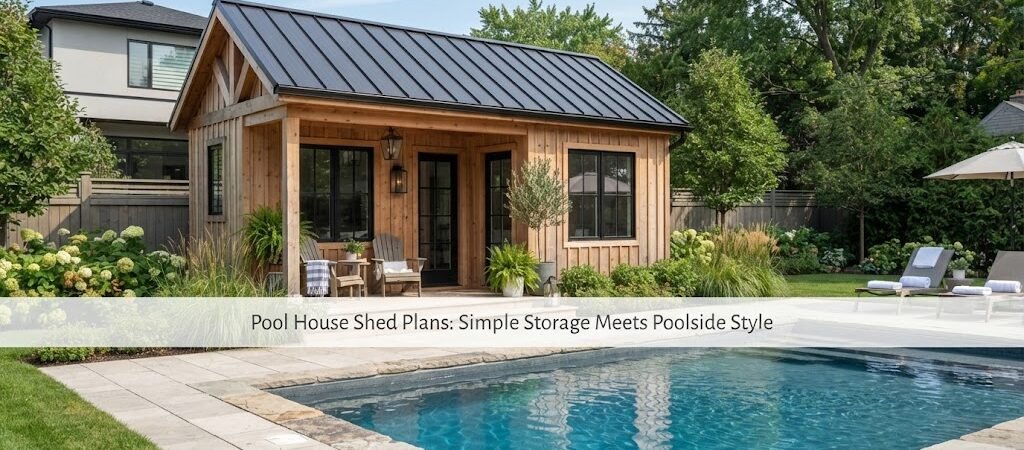
Anyone who owns a pool knows the clutter problem. Floats, noodles, chemicals, skimmers, extra towels, maybe a pump or filter system that needs to stay dry and out of the weather. A pool house shed solves this without turning your backyard into a construction zone. It gives you a place to stash gear while still looking like it belongs next to your pool, not like a random storage box someone dropped in the yard.
This idea sits right between a full pool house and a basic garden shed. It’s smaller, simpler, and usually cheaper to build than a full changing room or bathroom setup. But it still needs some thought if you want it to look good and actually work for how you use your pool.
What Makes a Shed Different From a Full Pool House
A pool house shed is mainly about storage, sometimes with a little extra function like a small counter or a spot to sit and dry off. A full pool house usually includes a bathroom, changing area, or even a kitchenette. If your main problem is just where to put pool equipment and outdoor gear, a shed-style structure is often the more practical answer.
That said, plenty of homeowners want something in between. A shed that has enough room for a bench, a few hooks, and maybe a small counter for drinks or towels. If you’re weighing how much function you actually need, looking through pool house and cabana plans can help you compare a simple storage shed against a more complete cabana layout before you commit to one direction.
Sizing It for What You Actually Store
Size depends heavily on what’s going inside. A small shed in the 6×8 or 8×10 foot range can usually handle pool toys, chemicals, a few towels, and basic maintenance tools. If you’re also housing a pump, filter, or heater, you’ll want more room to move around the equipment safely and access it for service.
It helps to make a rough list before deciding on dimensions:
- Pool chemicals and testing supplies
- Cleaning tools like nets, brushes, and vacuums
- Floats, noodles, and inflatable toys
- Towels and pool bags
- Equipment like pumps, filters, or heaters
- Outdoor furniture cushions in the off season
Once you see what needs a home, the size decision gets a lot easier. Don’t guess and end up with a shed that’s already full the week you finish building it.
Placement and Access Matter More Than People Expect
Where you put the shed affects how much you’ll actually use it. If it’s tucked too far from the pool, people won’t bother walking towels and toys back to it every time. A spot close to the pool deck, but not blocking sightlines or splash zones, usually works best.
Think about the door too. A wide single door or double doors make it easier to pull out larger items like a pool vacuum or folded lounge chairs. If the shed will house equipment that needs regular servicing, leave enough clearance in front of the door for a technician to work comfortably.
Ventilation is another detail that’s easy to skip and then regret. Chemicals and damp towels create moisture and odor if the space can’t breathe. Vents, louvered doors, or small windows help keep the inside from turning musty.
Style Choices That Keep It From Looking Like an Afterthought
A shed doesn’t have to look like a shed. Matching the roofline, siding, and trim color to your house or your pool deck makes a big difference. Many homeowners choose a design that echoes their main house just enough to feel intentional, without needing full architectural detail.
Simple upgrades that help:
- Matching roof shingles or metal panel color to the main house
- A coordinating paint or stain color for siding
- A small overhang or awning near the door for shade
- Basic landscaping or a gravel pad to define the space visually
None of this needs to be expensive. It’s more about consistency than cost. A shed with the right color and roofline looks like part of the plan rather than something added later.
When a Shed Idea Grows Into Something Bigger
Sometimes what starts as “I just need storage” turns into “actually, I’d like a place to change clothes too” or “it would be nice to have a small sink out here.” That’s a normal progression, and it’s worth thinking about early, even if you start small. Adding a partition wall, a small counter, or plumbing rough-in during the initial build is far easier than retrofitting later.
If you think there’s a chance you’ll want a changing area or half bath down the road, it’s worth looking at different pool house layouts to see how other homeowners have combined storage with light living space in one structure. Even a modest upgrade from pure storage to storage-plus-changing-room can make a pool day feel more comfortable for guests.
For those who like the idea of a slightly more rustic or cabin-style look for their shed, rather than a plain utility building, a cabin plans collection can offer some layout and roofline ideas that translate well to a smaller poolside structure.
Foundation and Weatherproofing Basics
Since this structure will sit near a pool, moisture is a constant factor. A raised foundation, whether it’s a simple gravel base, concrete pad, or pier system, helps keep the floor dry and reduces the chance of rot over time. Local soil conditions and drainage patterns will affect which foundation type makes the most sense, so it’s worth asking a local contractor rather than assuming one approach works everywhere.
Weatherproofing details like sealed siding joints, a properly flashed roof, and rust-resistant hardware matter more here than they would for a shed somewhere dry and shaded. Pool areas deal with splashing, humidity, and sometimes chlorine exposure, so materials that hold up in damp conditions will save you maintenance headaches later.
Getting Started
A pool house shed is one of the simplest ways to clean up a cluttered pool area without taking on a huge project. Start with an honest list of what you need to store, pick a size and location that fits your yard, and choose finishes that match your home instead of standing out for the wrong reasons.
If you’re still deciding how much space or function you actually want, comparing full pool house and cabana plans against a simpler shed layout can help you settle on the right scope before you start building.