
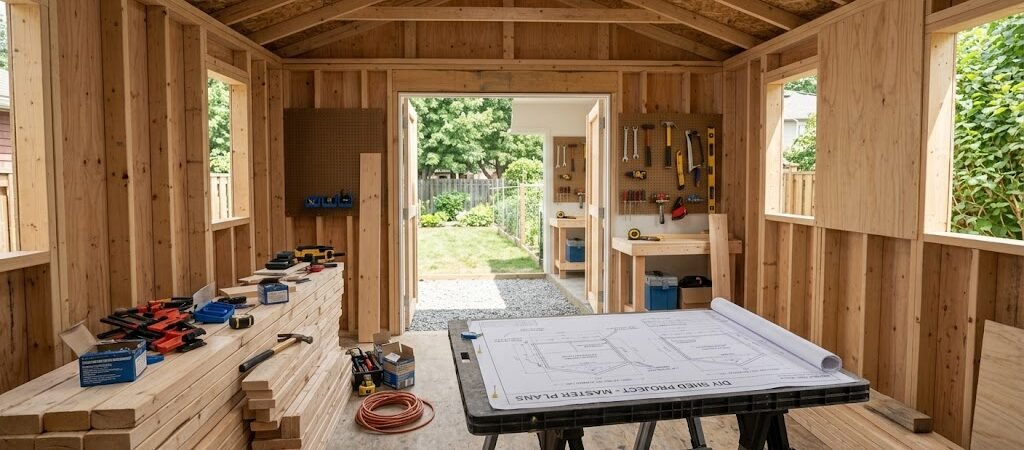
DIY shed plans can cut your total build cost by 40 to 60 percent compared to hiring a contractor or buying a prefab kit. The biggest savings come from choosing the right size, buying materials during off-season sales, and avoiding common framing mistakes that force expensive re-dos.
Why Are DIY Shed Plans Worth the Effort?
The average homeowner spends between $3,000 and $8,000 on a professionally built shed. A well-planned DIY build of the same size and quality typically runs $1,200 to $3,500 in materials alone. That gap isn’t luck; it’s planning.
Pre-cut kit sheds promise simplicity but often cost 30 to 50 percent more per square foot than building from scratch. The trade-off is convenience for cash. You save time but lose money. For someone who enjoys weekend projects or wants to control every detail, DIY shed plans make financial sense quickly.
The real advantage goes beyond the initial build. Proper plans give you a material takeoff before you buy anything. You know exactly how many 2x4s, sheets of plywood, and bundles of shingles you need. That prevents over-ordering, which is one of the most common budget killers in shed projects.
How Much Can You Actually Save?
Savings vary based on shed size, location, and how much labor you do yourself. Here’s a realistic breakdown for a standard 10×12 shed built on a concrete slab foundation:
| Build Method | Estimated Total Cost | Time Required | Skill Level |
|---|---|---|---|
| DIY from plans | $1,800 to $3,200 | 3 to 6 weekends | Beginner to intermediate |
| Prefab kit | $3,500 to $6,000 | 1 to 2 weekends | Beginner |
| Professional contractor | $5,000 to $10,000+ | 1 to 3 weeks | N/A |
The numbers shift depending on your region. Lumber prices in the Pacific Northwest run higher than in the Southeast. Concrete costs vary by local supplier. But the ratio holds: DIY from solid plans consistently lands in the lowest cost bracket.
Where Do People Waste Money on Shed Builds?
Even smart builders bleed cash on avoidable mistakes. The following pitfalls show up repeatedly in forums, contractor conversations, and post-build regret threads:
- Over-sizing the shed: Most people plan for a 12×16 or 16×20 when a 10×12 handles their actual needs. Every extra foot adds costs in foundation, framing, roofing, and interior finish.
- Skipping the material takeoff: Not having a cut list can result in under-ordering or over-ordering. Proper material lists from your plans eliminate guesswork.
- Buying lumber at peak season: Prices rise 15 to 25 percent from spring to early summer. Buy materials in late fall or winter to save hundreds.
- Choosing the wrong foundation: A full concrete slab for light storage is overkill. Cheaper options like gravel pads or concrete pavers perform just as well for smaller sheds.
Choosing the Right Shed Plans for Your Budget
Not all DIY shed plans deliver equal value. Free plans often lack detail, skip critical framing connections, or omit material lists entirely. Paid plans from reputable sources typically include cut lists, elevation drawings, and step-by-step assembly notes.
Most homeowners find the sweet spot in mid-range plans costing $20 to $50. These cover 10×10 to 12×16 sheds with clear diagrams, roof pitch options, and material specifications. This small investment pays for itself quickly by preventing return trips to the lumber yard.
Material Choices That Keep Costs Down Without Cutting Corners
Cost-saving strategies start with the frame. Use pressure-treated 2x4s for the bottom plate—anything else rots. The remaining framing can use standard studs. The cost difference on a 10×12 shed can be $150 to $300.
For sheathing, oriented strand board (OSB) is 30 to 40 percent cheaper than plywood but requires extra care during installation to prevent moisture damage.
Roofing can also impact costs. Three-tab asphalt shingles are a budget choice, costing $1.50 to $2.50 per square foot. Architectural shingles last longer at a higher price, but for most backyard sheds, three-tab shingles are sufficient.
What Are the Best Foundation Options Ranked by Cost and Longevity?
Your foundation impacts both costs and shed durability. Here’s how different foundation types rank for a 10×12 shed:
| Foundation Type | Cost for 10×12 | Lifespan | Best For |
|---|---|---|---|
| Gravel pad with skids | $200 to $500 | 10 to 15 years | Light storage sheds |
| Concrete pavers on compacted gravel | $400 to $800 | 15 to 20 years | Most residential sheds |
| Poured concrete slab | $1,200 to $2,500 | 25+ years | Heavy workshops |
| Pressure-treated timber frame on piers | $600 to $1,200 | 15 to 20 years | Sloped yards |
For a garden shed, concrete pavers on gravel strike a balance for stability and cost.
When Should You Time Your Build for Maximum Savings?
Lumber prices follow seasonal patterns, peaking from March through June. Prices typically drop 10 to 20 percent from July to October, with the lowest prices in late fall and winter. Consider purchasing in winter and framing in spring.
What Are Common Framing Mistakes That Cost Money?
Framing errors can be costly; they reveal themselves long after mistakes are made. Here are common mistakes to avoid:
- Skipping level and plumb checks: Any misalignment creates cascading problems in the build.
- Using wrong nail lengths: Ensure structural joints have proper nail lengths to prevent failures.
- Ignoring local wind and snow load requirements: Building codes are essential for safety—comply to avoid costly repairs.
When to Hire a Professional Instead?
While DIY plans save money, certain projects may necessitate professional help. If your shed requires an extensive foundation, electrical wiring, or permits with engineered drawings, hiring a contractor might be wise.
FAQ
How much can I really save building a shed myself?
Most homeowners save between 40 and 60 percent compared to buying a prefab kit or hiring a contractor. A 10×12 shed could run $1,800 to $3,200 in materials when built from detailed DIY plans.
Are free shed plans worth using?
Free plans often lack critical construction details. Paid plans in the $20 to $50 range usually provide comprehensive information that avoids costly mistakes.
Do I need a permit to build a shed?
Permit requirements vary by locality. Many areas exempt sheds under 120 to 200 square feet; others require permits regardless of size.
What’s the cheapest foundation for a shed?
A compacted gravel pad with timber skids is the lowest-cost option at $200 to $500. Concrete pavers, while slightly more expensive, offer better long-term stability.
Can I build a shed in a weekend?
A basic shed can be completed in a long weekend, but complex designs may take 3 to 6 weekends of work.
Your Next Steps
Building a shed from DIY plans doesn’t have to be complicated or expensive. Follow this checklist to stay on budget:
- Measure your space and pick an appropriate size shed.
- Check zoning and permit requirements.
- Choose a foundation type that matches your climate.
- Buy a detailed plan package with a material list.
- Order materials during off-peak seasons.
- Use OSB for sheathing and three-tab shingles for roofing.
- Check alignment at every framing stage.
- Limit treated lumber to where it contacts the earth.
The preparation surrounding your shed build makes all the difference. Get the size right, the foundation right, and purchase materials at the right time to ensure success.