
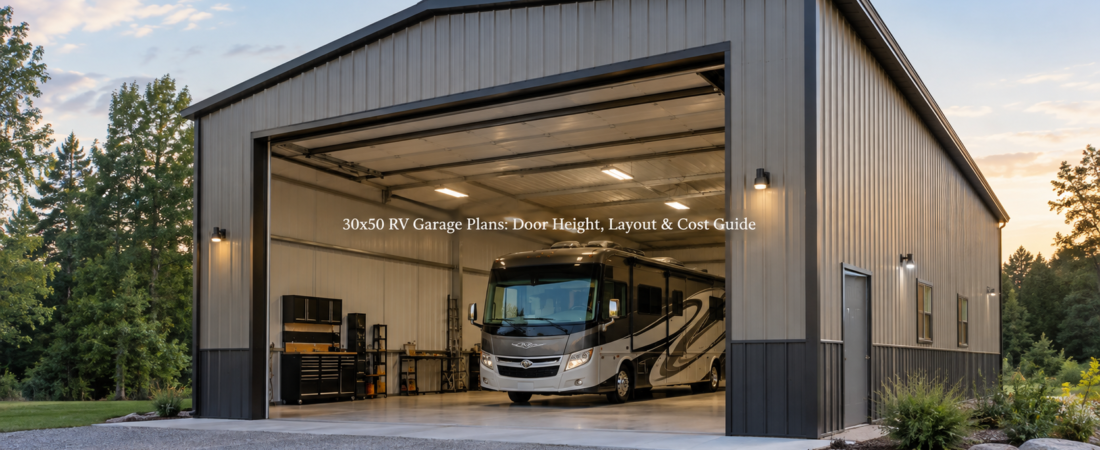
If you’ve got an RV, you already know the struggle. They’re big, they’re tall, and they don’t exactly fit in a normal garage. That’s where a 30×50 RV garage comes in. It’s a popular size because it gives you plenty of room without being over the top. Let’s talk about door height, layout ideas, and what it might cost to build one.
Door Height Matters
The first thing you’ve gotta think about is the door. RVs aren’t like cars—you can’t squeeze them through a regular garage opening. Most RVs are between 10 and 13 feet tall. So you’ll want a door that’s at least 14 feet high to be safe. Width is important too. A 12-foot wide door usually works, but if you’ve got a big rig with slide-outs or mirrors sticking out, go wider. Trust me, you don’t want to scrape the side every time you pull in.
Some folks even go with 16-foot wide doors just for peace of mind. It’s one of those things where bigger is better, because once the building is up, changing the door size is a pain.
Layout Ideas

A 30×50 garage gives you 1,500 square feet. That’s a lot of space. You’ll have room for the RV plus extras. Some people keep it simple—just a big open bay. Others like to add a workshop area, storage for tools, or even a small office corner. If you’re into tinkering, you’ll appreciate having a spot for a workbench and shelves.
Think about how you’ll use the space. Do you want to park just the RV, or do you also want room for a truck, boat, or ATV? A 30×50 can handle more than one vehicle if you plan it right. You can divide the space with walls or just keep it open. I’ve seen folks put in a loft for extra storage too. It’s handy for boxes, camping gear, or holiday decorations that you don’t want cluttering the house.
Lighting is another thing. Big buildings can feel dark if you don’t plan ahead. Windows help, but LED shop lights are cheap and bright. Put them everywhere. You’ll thank yourself later when you’re working on something at night.
Cost Guide
Now, the big question—how much does it cost? Well, it depends. A basic metal building shell can run from a few thousand bucks to tens of thousands. Add concrete, insulation, electricity, plumbing, and suddenly the price climbs. If you want it finished out nice, with drywall and heating, you’re looking at the higher end. If you just want a simple shelter for the RV, you can keep it cheaper.
Location matters too. Labor costs and material prices change depending on where you live. Rural areas might be less expensive than cities. Also, don’t forget permits. Some towns are picky about building size and height. Always check before you start, or you might end up with a headache later.
One tip: spend money on the foundation. A good concrete slab makes everything easier. Don’t skimp there. If the floor cracks or shifts, you’ll regret it.
Why 30×50 Works Well
You might wonder why 30×50 is such a common size. It’s kind of the sweet spot. Big enough for most RVs, but not so huge that it feels like a warehouse. You can park the RV, still have room to walk around, and maybe even fit another vehicle. Plus, it’s a size that most building companies are used to, so you’ll find plenty of plans and kits available.
If you go smaller, you risk being cramped. Go bigger, and costs jump fast. So 30×50 hits that balance.
A Few Extras to Think About
Insulation is worth it if you live somewhere hot or cold. Keeps the RV from baking in summer or freezing in winter. Ventilation helps too—metal buildings can trap heat. A couple of fans or vents make a big difference.
Security is another thing. RVs aren’t cheap, so a solid lock and maybe a camera system is smart. And don’t forget about hookups. Some folks add electrical outlets or even water lines so they can prep the RV before a trip without moving it.

Wrapping It Up
Building a 30×50 RV garage is a big project, but it’s doable. Door height is the first thing to nail down, then think about layout, then budget. Costs can swing a lot depending on how fancy you go, but even a basic setup makes life easier. No more worrying about hail, sun damage, or squeezing into a too-small space.
If you’re serious about it, I’d say spend some time looking at different RV garage plans before you start. It’s better to plan it out right than to wish you’d added a taller door or more storage later. A good guide or resource can save you money and headaches down the road.