
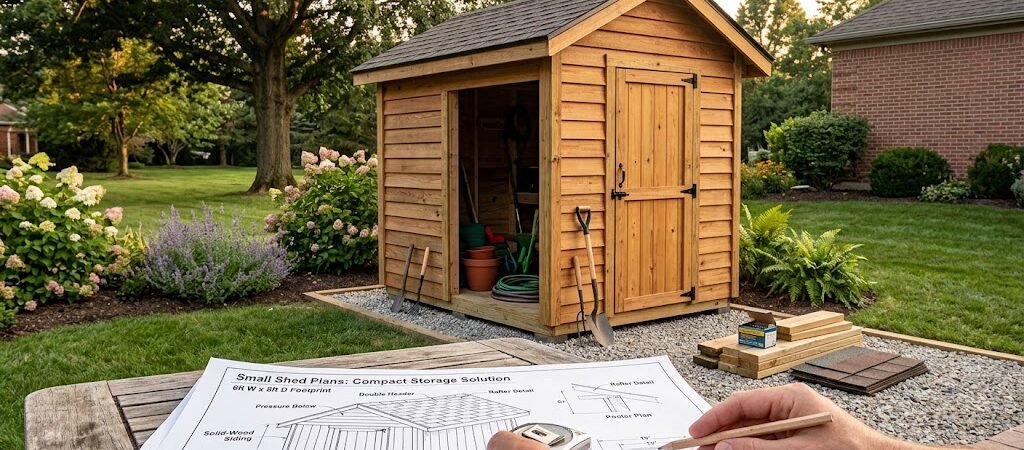
Small shed plans typically range from 8×10 to 10×12 feet, costing $1,500 to $5,000 depending on materials and complexity. These compact storage sheds, mini workshop sheds, and affordable backyard buildings maximize limited space while providing functional storage or workspace solutions for homeowners and small businesses.
The Hidden Capacity of Compact Storage Sheds
Most people underestimate what fits in a small footprint. An 8×10 shed holds approximately 80 square feet of floor space. That translates to shelving for seasonal decorations, garden equipment storage, and tool organization. A 10×12 compact storage shed gives you 120 square feet—enough for a workbench, bike storage, and bulk supplies.
Here’s what most plan guides don’t tell you: vertical space matters more than floor area. Adding 8-foot walls with loft storage or pegboard systems effectively doubles your usable capacity. You can store items above eye level while keeping frequently used tools within arm’s reach.
What Actually Fits in Common Small Shed Sizes
- 8×10 shed: 2-3 bikes, seasonal decor bins, garden tools
- 10×12 shed: Workbench, lawnmower, bulk supplies, overhead loft
- 10×14 shed: Mini workshop setup, tool storage, seating area
Before committing to small shed plans, measure your actual space. Leave 2 feet clearance on all sides for door access and maintenance. A compact storage shed placed too close to property lines creates access problems and potential zoning issues.
Mini Workshop Shed Layouts That Actually Work
Turning a small shed into a functional workspace requires smart planning. A mini workshop shed needs proper lighting, ventilation, and organized storage. The key is designing around your primary activities, not just packing in more shelves.
Consider your workflow pattern. If you’re building projects, position your workbench near the door for material movement. If you’re doing repair work, place tool storage within arm’s reach of your primary station. A well-planned mini workshop shed maximizes efficiency in tight quarters.
Essential Mini Workshop Shed Features
Lighting transforms a dark shed into a functional workspace. LED panel lights or shop lights cost $50 to $150 and provide even illumination. Position your main work area under direct lighting, then add task lights for detailed work.
Ventilation prevents moisture buildup and keeps your workspace comfortable. Install a soffit vent, gable vent, or small window. A $20 box fan provides active ventilation during warmer months. Proper airflow protects both you and your tools from humidity damage.
Power access requires careful planning. Running electricity to a compact storage shed costs $300 to $800 depending on distance from your house. Hire a licensed electrician for this work—it’s not a DIY project unless you’re qualified.
Cost Breakdown for Affordable Backyard Building Projects
Budgeting for small shed plans requires understanding all cost components. Material costs vary significantly based on quality and local prices. Labor costs depend on whether you build it yourself or hire contractors.
Here’s a realistic cost breakdown for common small shed projects:
| Shed Size | DIY Cost | Professional Build | Time Required |
|---|---|---|---|
| 8×10 shed | $1,200-$2,500 | $2,500-$4,500 | 2-4 weekends |
| 10×12 shed | $1,800-$3,500 | $3,500-$6,000 | 3-6 weekends |
| 10×14 shed | $2,200-$4,200 | $4,000-$7,500 | 4-8 weekends |
These estimates include foundation materials, framing, siding, roofing, doors, and basic electrical. They don’t include permits, site preparation, or custom features like windows or finished interiors.
Where Costs Add Up Quickly
Foundation work can surprise budget-conscious builders. A concrete slab for an 8×10 shed costs $400 to $800 in materials. Poured concrete foundations require professional help, while gravel or paver bases are DIY-friendly. Proper drainage prevents water damage and extends your shed’s lifespan.
Roofing materials significantly impact cost and appearance. Asphalt shingles cost $1 to $3 per square foot installed. Metal roofing costs $3 to $7 per square foot but lasts 40+ years. Consider your climate and budget when choosing roofing for your affordable backyard building.
Doors and windows add $200 to $600 to most projects. A single 3×6 door costs $150 to $300. Adding a window provides natural light but reduces wall space for storage. Balance functionality with your specific needs.
Planning and Permitting for Small Shed Plans
Before breaking ground on your compact storage shed, understand local requirements. Most municipalities regulate shed construction through zoning ordinances and building codes. These rules protect property values and ensure structural safety.
Research your local regulations before purchasing materials or starting construction. Contact your building department or visit their website. Many jurisdictions require permits for sheds over 120 square feet, but rules vary significantly by location.
The Environmental Protection Agency provides resources on proper waste disposal and environmental considerations for outdoor structures. Understanding these guidelines helps you build responsibly while protecting local ecosystems.
Common Permit Requirements
Permit requirements differ by municipality, but most follow similar patterns. You’ll typically need a building permit for structural work, an electrical permit if adding power, and possibly a zoning review for placement.
Application fees range from $50 to $200. Processing times vary from 1 week to 2 months depending on your jurisdiction. Submit complete plans with site diagrams, foundation details, and electrical layouts to avoid delays.
Some areas have setback requirements—minimum distances from property lines, structures, and utilities. These rules prevent encroachments and ensure access for emergency services. Violating setback requirements can result in fines or forced removal.
Foundation Options for Compact Storage Sheds
Your foundation choice affects cost, durability, and installation complexity. Different foundations suit different soil conditions, budgets, and shed weights. Understanding your options helps you make the right choice for your specific situation.
Gravel bases are the most affordable option, costing $100 to $300 for an 8×10 shed. They provide excellent drainage and work well in most soil conditions. However, they require proper site preparation and leveling for long-term stability.
Concrete piers offer a middle ground between cost and permanence. Pre-cast piers cost $20 to $40 each, with 8 to 12 piers typically needed. They provide stable support while allowing access underneath for ventilation and maintenance.
Foundation Selection Guide
- Gravel base: Best for well-drained soil, lowest cost, DIY-friendly
- Concrete piers: Good for uneven ground, moderate cost, stable support
- Concrete slab: Highest cost, permanent solution, requires professional help
- Deck blocks: Easiest installation, suitable for lightweight sheds only
Soil conditions dramatically affect foundation performance. Clay soils expand and contract with moisture changes, potentially shifting your shed. Sandy soils drain well but may require deeper footings. Consider soil testing or professional consultation for challenging conditions.
Material Choices for Durable Small Sheds
Material selection impacts your shed’s appearance, maintenance requirements, and lifespan. Different materials offer different trade-offs between cost, durability, and aesthetics. Understanding these differences helps you make informed decisions.
Pine framing lumber costs $3 to $5 per board foot. Pressure-treated lumber resists rot and insects, making it ideal for ground contact and humid climates. Cedar and redwood offer natural resistance but cost 50% to 100% more than treated pine.
Siding options range from $1 to $8 per square foot installed. Vinyl siding requires minimal maintenance but can crack in extreme cold. Fiber cement offers durability at a higher price point. Wood siding provides classic aesthetics but requires regular painting or staining.
Insulation Considerations
Insulating your compact storage shed depends on your climate and intended use. Fiberglass batts cost $0.50 to $1.50 per square foot installed. Spray foam insulation costs $1 to $3 per square foot but provides superior air sealing.
Insulation becomes essential if you’re using your shed as a workspace year-round. It maintains comfortable temperatures and protects temperature-sensitive tools and materials. Consider your local climate and usage patterns when deciding whether insulation is necessary.
Sourcing Quality Small Shed Plans
Finding reliable small shed plans requires evaluating sources carefully. Free plans online often lack detail or contain errors. Professional plan packages cost $20 to $100 but provide comprehensive instructions and material lists.
Architectural and engineering firms offer custom design services starting at $500 to $1,500. These services provide detailed plans tailored to your specific site conditions and requirements. They’re worth considering for complex projects or when structural engineering is required.
Building supply stores often provide free or low-cost plans with material purchases. These plans are typically basic but suitable for straightforward projects. They can be a good starting point for first-time builders.
Plan Quality Indicators
Quality plans include detailed dimensions, material lists, and step-by-step instructions. They show foundation details, framing layouts, and roofing specifications. Look for plans that address drainage, ventilation, and structural requirements.
Check plan reviews and builder forums for feedback on specific plan sets. Experienced builders often share insights about plan quality, common mistakes, and helpful modifications. Their real-world experience can save you time and money.
Frequently Asked Questions About Small Shed Plans
How much does it cost to build a small shed?
Building an 8×10 shed costs $1,200 to $2,500 DIY or $2,500 to $4,500 professionally. A 10×12 shed runs $1,800 to $3,500 DIY or $3,500 to $6,000 with contractors. Costs vary based on materials, location, and project complexity.
Do I need permits for small shed plans?
Permit requirements depend on your local jurisdiction. Most areas require permits for sheds over 120 square feet or with electrical work. Check with your building department before starting construction to avoid fines or removal orders.
What’s the best foundation for a compact storage shed?
Gravel bases work well for most conditions and cost $100 to $300. Concrete piers provide stable support for $200 to $400. Concrete slabs offer permanence but cost $400 to $800 and typically require professional installation.
How long does it take to build a mini workshop shed?
Most small sheds take 2 to 6 weekends to complete DIY. An 8×10 shed typically requires 20 to 40 hours of work. A 10×12 shed needs 30 to 60 hours. Complex features like electrical work or finished interiors can add time.
Next Steps for Your Small Shed Plans Project
Start by measuring your available space and researching local requirements. Create a detailed list of what you need to store or build. This inventory determines your ideal shed size and layout.
Research small shed plans from multiple sources. Compare features, costs, and builder reviews before purchasing. Consider hiring a professional if your project involves complex electrical work or structural requirements.
Obtain necessary permits before starting construction. Order materials with lead time in mind—lumber and specialty items can take weeks to arrive. Plan your project timeline around material availability and your schedule.
Ready to transform your backyard with a functional compact storage shed? Start with detailed small shed plans that match your specific needs and local requirements. The right foundation, materials, and layout create a durable structure that serves your storage or workshop needs for decades.