
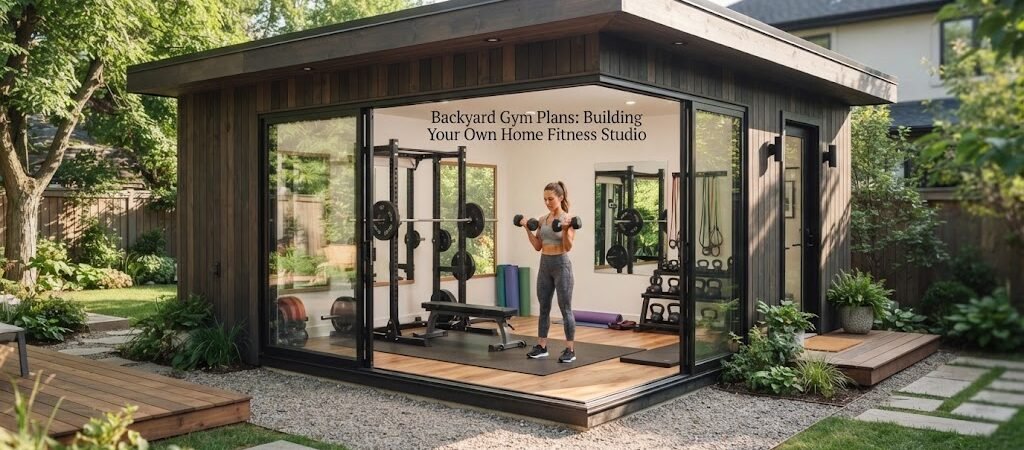
Backyard Gym Plans: Building Your Own Home Fitness Studio
Building a backyard gym gives you a dedicated space to work out without leaving your property. It keeps the noise, sweat, and heavy equipment out of your main house. But turning a backyard studio into a functional home fitness studio takes more than just dropping a treadmill in a basic shed. You need a solid plan. This guide covers the basics of sizing, insulating, and wiring your detached workspace so you can build a gym that actually gets used year after year.

Sizing Your Backyard Fitness Studio
How big should your backyard fitness studio be? The answer depends entirely on your gear and your workout style. A basic setup for a power rack, a bench, and some dumbbells might only need 10 by 12 feet. If you want to add a treadmill, a rowing machine, and some open floor space for stretching or yoga, you will want to look at 12 by 16 feet or larger.
When you plan the layout, think about how you move. You need clear space around weight machines so you do not bump into walls. Leave room for a small seating area, a place to store towels, and maybe a mini fridge for cold water.
Do not forget to look up. If you plan to do overhead presses, use a pull-up bar, or jump rope, you need enough vertical space. A standard eight-foot ceiling might feel a bit low when you are lifting weights over your head. Try to plan for nine or ten-foot ceilings if your budget and local height restrictions allow it.
Insulation and Climate Control
A backyard office or studio needs to be comfortable all year. If you skip insulation, your gym will be too hot in the summer and freezing in the winter. You will not want to work out in those conditions, and the space will just go to waste.
Insulate the walls, floor, and ceiling. Standard fiberglass batts work well for the walls. For the floor, rigid foam insulation helps block cold from coming up through the ground.
You also need a reliable way to heat and cool the space. A mini-split system is a popular choice for a detached workspace. It handles both heating and air conditioning without taking up much room. Make sure your main electrical panel can handle the extra load before you install it.
Electrical and Lighting
Gyms need a lot of power. Treadmills, rowing machines, and space heaters draw a lot of electricity. Plan for plenty of outlets. Put heavy equipment on different circuits if you can. You do not want a tripped breaker ruining your workout halfway through.
Lighting matters just as much. You need bright, even light to see your form and stay safe. LED ceiling lights work best. Add some windows for natural light, but place them carefully. You want light without losing wall space needed for mirrors or storage racks.
Flooring and Foundations
The foundation sets the stage for your whole project. A concrete slab is the most solid choice for a heavy backyard gym. It handles the weight of dropped dumbbells and large machines without shifting. If you want to save money and avoid pouring concrete, a pier and beam foundation can work. Just make sure the floor framing is strong enough to handle the impact of heavy weights.
For the actual floor inside the studio, use high-density rubber mats. They protect the subfloor, absorb sound, and give you a safe, stable surface to lift on.
Soundproofing and Ventilation
Working out means dropping weights, clanking plates, and playing loud music. If your backyard studio is close to your house or your neighbors, sound control is important. Add extra insulation in the interior walls. Use solid-core doors instead of hollow ones. Heavy rubber flooring also helps absorb impact noise.
Ventilation is just as critical. A sealed, insulated space will get stuffy fast. Install a ceiling fan to keep air moving. If you can, add a window that actually opens to let in fresh air. For a more permanent solution, a small exhaust fan can pull stale air out and bring fresh air in.
Planning for Future Flexibility
Sometimes a backyard structure needs to do more than one thing. You might build a fitness studio now, but later decide you want a space to relax by the pool or host guests. If you think your detached workspace might change use over time, looking at pool house and cabana plans can give you great ideas for flexible layouts. These designs often include space for both recreation and relaxation, which is easy to adapt for a home gym today and a guest space tomorrow.
Permits and Neighborhood Rules
Before you start building, check your local rules. Most towns require a building permit for a detached structure over a certain size. They also have setback rules that dictate how far the building must be from your property lines. Call your local building department to find out exactly what is required. It is much easier to get permission before you start digging than to fix a problem after the walls are up.
Do not just check with the city. If you live in a neighborhood with a homeowners association, read their rules. Many HOAs have strict guidelines about what you can build in your backyard. They might limit the size, the exterior materials, or the roof style of your detached workspace. Getting their approval early saves you a lot of headaches.
Designing a Welcoming Space
If you want your backyard gym to feel less like a sterile workout room and more like a personal retreat, consider the exterior design. A rustic look can make the space feel inviting and peaceful. Borrowing ideas from a cabin plans collection can help you design a cozy, wood-sided studio that blends nicely into your yard. A welcoming exterior makes you much more likely to walk out there and get your workout done, even on days when you feel tired.

Wrapping Up Your Plans
Building a home fitness studio in your backyard is a big project, but it pays off every time you use it. Take your time with the plans. Focus on good insulation, plenty of power, and a solid foundation. When you get the basics right, you will have a great space to stay healthy and active for years to come.